
บริษัทหลักทรัพย์ ไทยพาณิชย์ จูเลียส แบร์ จำกัด (SCB Julius Baer) จัดงานสัมมนาเอ็กซ์คลูซีฟ “มุมมองเศรษฐกิจโลกช่วงครึ่งแรกของปี 2569” (Market Outlook H1/2026) ภายใต้หัวข้อ “Crossroads of a Growth Renaissance” สำหรับลูกค้าที่มีความมั่งคั่งระดับสูง นำเสนอปัจจัยสำคัญที่มีผลต่อการลงทุนในช่วงครึ่งปีแรก
โดยจูเลียส แบร์ ให้มุมมองว่าภาพรวมเศรษฐกิจโลกและการลงทุนปีนี้จะเป็นปีแห่งการ “ปรับสมดุลและตั้งต้นใหม่ (Resetting and Rebalancing)” ของระบบการเงินโลก โดยหนึ่งในจุดเปลี่ยนสำคัญคือการแต่งตั้งประธานธนาคารกลางสหรัฐฯ (Federal Reserve) คนใหม่ สะท้อนการเปลี่ยนผ่านด้านผู้นำนโยบายการเงินของสหรัฐฯ ขณะเดียวกัน ความแตกต่างเชิงนโยบายระหว่างสหรัฐฯ ยุโรป และจีน กำลังทวีความชัดเจนมากขึ้น
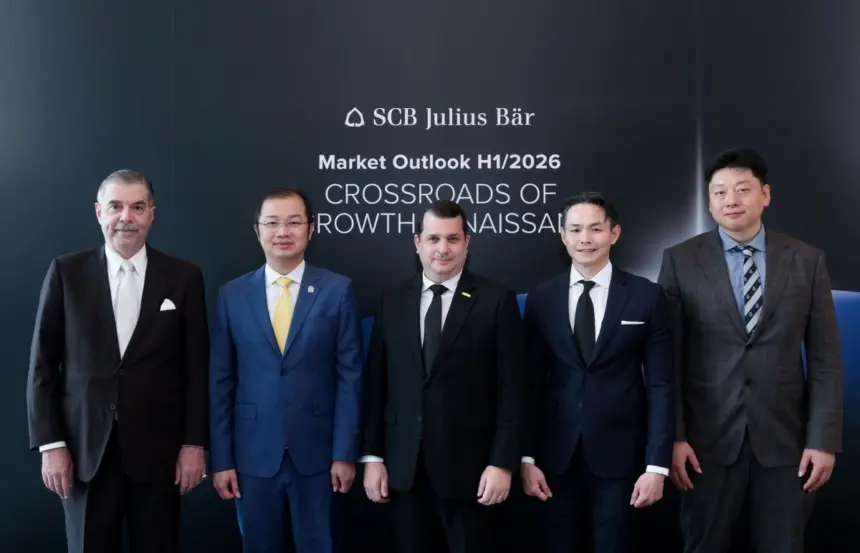
ส่งผลให้นักลงทุนจำเป็นต้องทบทวนและจัดสรรการลงทุนในแต่ละภูมิภาคอย่างรอบคอบมากกว่าเดิม ภายในงานได้รับเกียรติจาก นายเอเดรียน เมซซินาวเออร์ ประธานเจ้าหน้าที่บริหารและนายคีน ตัน ผู้ช่วยกรรมการผู้จัดการอาวุโส ผู้บริหารฝ่ายการแนะนำการลงทุนบริษัทหลักทรัพย์ ไทยพาณิชย์ จูเลียส แบร์ จำกัด พร้อมด้วย นายมาร์ค แมทธิว หัวหน้าฝ่ายวิจัยเอเชียแปซิฟิก นายหลุยส์ ชัว นักวิเคราะห์ ฝ่ายวิจัยภูมิภาคเอเชียธนาคารจูเลียส แบร์ และ นายเรย์ เจีย หัวหน้าฝ่ายวิจัย (ภูมิภาคเอเชียแปซิฟิก ไม่รวมประเทศอินเดีย) และรองหัวหน้าฝ่ายส่งเสริมการค้า (ประเทศจีน) สภาทองคำโลก ร่วมงานสัมมนา เมื่อเร็วๆ นี้ ณ โรงแรมดุสิตธานี กรุงเทพฯ
นายเอเดรียน เมซซินาวเออร์ (Adrian Mazenauer) ประธานเจ้าหน้าที่บริหาร บริษัทหลักทรัพย์ ไทยพาณิชย์ จูเลียส แบร์ จำกัด กล่าวว่า “ภาพรวมการลงทุนในปีที่ผ่านมายังคงเป็นบวกแม้ในระหว่างปีจะมีความไม่แน่นอนจากนโยบายภาษีการค้าของสหรัฐฯ แต่การปรับลดอัตราดอกเบี้ยของหลายประเทศทั่วโลกรวมถึงการขยายการลงทุนด้าน AI ช่วยหนุนให้เศรษฐกิจยังคงขยายตัวและตลาดหุ้นปรับตัวเพิ่มขึ้น
สำหรับปี 2569 เราคาดว่าเศรษฐกิจโลกและประเทศหลักๆ ยังคงขยายตัวได้ ขณะที่นโยบายการเงินยังต้องจับตาดูประธานธนาคารกลางสหรัฐฯ คนใหม่ว่าจะมีการดำเนินนโยบายการเงินอย่างไร อย่างไรก็ตาม เรายังคาดว่าอัตราดอกเบี้ยยังมีโอกาสปรับลดลงซึ่งจะช่วยหนุนภาพการลงทุนในตลาดตราสารหนี้และส่งผลให้ค่าเงินดอลลาร์สหรัฐมีแนวโน้มอ่อนค่าลงต่อเนื่อง แนะนำลงทุนในตราสารหนี้ออสเตรเลียที่มีความน่าสนใจทั้งอัตราผลตอบแทนที่ยังอยู่ในระดับสูงกว่าสหรัฐฯและโอกาสจากค่าเงินออสเตรเลีย (AUD) ส่วนเงินฟรังก์สวิส (CHF) ยังคงทำหน้าที่เป็นสินทรัพย์ปลอดภัย (Safe Haven) ได้อย่างมีประสิทธิภาพในช่วงที่ตลาดผันผวน แนะนำให้นักลงทุนกระจายการลงทุนให้กว้างกว่ากลุ่มเทคโนโลยี
ซึ่งเป็นผู้นำตลาดในช่วงที่ผ่านมา โดยเพิ่มน้ำหนักไปยังหุ้นเชิงป้องกันความเสี่ยง (Defensive) เช่น กลุ่มเฮลธ์แคร์ รวมถึงหุ้นวัฏจักรเศรษฐกิจของยุโรป เพื่อเพิ่มเสถียรภาพให้กับพอร์ตในสภาวะที่ความไม่แน่นอนยังคงอยู่ ตลาดหุ้นเกิดใหม่ (Emerging Markets) ยังคงได้รับปัจจัยสนับสนุนจากความเป็นไปได้ของการปรับลดอัตราดอกเบี้ยของ Fed แนวโน้มการอ่อนค่าของเงินดอลลาร์สหรัฐ และการฟื้นตัวของการเติบโตด้านกำไรบริษัทจดทะเบียน โดย SCB Julius Baer ยังคงให้น้ำหนักเชิงบวกกับตลาดเอเชียเป็นหลัก และมองว่าจีนเป็นหนึ่งในตลาดที่มีความน่าสนใจเชิงกลยุทธ์ ในปี 2569”
“นอกจากนี้การลงทุนในสินทรัพย์ทางเลือก เช่น บริษัทหุ้นนอกตลาด และธุรกิจด้านโครงสร้างและสาธารณูปโภคพื้นฐานนอกตลาดจะช่วยกระจายความเสี่ยงและลดความผันผวนของพอร์ตการลงทุนได้ สำหรับทองคำ ยังคงเริ่มต้นปี 2569 ได้อย่างแข็งแกร่ง จากแรงหนุนความต้องการสินทรัพย์ปลอดภัย การเข้าซื้อทองคำของธนาคารกลางทั่วโลก และทิศทางอัตราดอกเบี้ยสหรัฐที่อยู่ในช่วงขาลง อย่างไรก็ดี ความผันผวนในระยะสั้นที่อาจเพิ่มขึ้น ทำให้นักลงทุนควรพิจารณากลยุทธ์ป้องกันความเสี่ยงควบคู่ไปด้วย
SCB Julius Baer มองว่าภายใต้สภาวะที่ความเสี่ยงด้านการดำเนินนโยบายและการลงทุนเพิ่มสูงขึ้น กลยุทธ์การลงทุนของปี 2569 จะไม่ใช่ “ซื้อแล้วถือยาว” เพียงอย่างเดียวอีกต่อไป แต่เป็นปีที่นักลงทุนจำเป็นต้องใช้กลยุทธ์เชิงรุก มีความยืดหยุ่น และบริหารพอร์ตอย่างมีชั้นเชิงมากขึ้น เพื่อรับมือกับการเปลี่ยนแปลงของเศรษฐกิจและตลาดการเงินโลก โดยเรายังคงมุ่งมั่นเคียงข้าง และสนับสนุนลูกค้าคนสำคัญ
ผ่านโซลูชันการบริหารความมั่งคั่งแบบครบวงจรและเป็นที่ยอมรับในระดับสากล ซึ่งสามารถช่วยวางแผนการเงิน การลงทุน และการส่งต่อความมั่งคั่งได้อย่างมีประสิทธิภาพ สะท้อนความมุ่งมั่นขององค์กร ‘Your Legacy. Our Promise.’ ที่ลูกค้าเชื่อมั่นและไว้วางใจมาโดยตลอด” นายเอเดรียนกล่าวทิ้งท้าย
…
SCB Julius Baer Unveils Global Economic Outlook for the First Half of 2026 Highlights 2026 as a Year of Reset and Rebalancing, Recommends Global Portfolio Diversification
SCB-Julius Baer Securities Co., Ltd. hosted an exclusive seminar titled “Global Economic Outlook for the First Half of 2026” (Market Outlook H1/2026) under the theme “Crossroads of a Growth Renaissance”, tailored for Ultra High Net Worth Individuals (UHNWIs). The seminar highlighted key factors expected to influence investment decisions in the first half of 2026. Julius Baer views the global economic and investment landscape in 2026 as a year of “Resetting and Rebalancing” of the global financial system. One of the major turning points is the appointment of a new Chairman of the U.S. Federal Reserve, reflecting a transition in U.S. monetary policy leadership. At the same time, policy divergence among the United States, Europe, and China is becoming increasingly pronounced, prompting investors to reassess and allocate investments across regions more carefully than ever.
The seminar was honored by the presence of Mr. Adrian Mazenauer, Chief Executive Officer and Mr. Kean Tan, Managing Director Senior Advisor Head of Investment Solutions, SCB-Julius Baer Securities Co., Ltd., together with Mr. Mark Matthews, Head Research Asia and Mr. Louis Chua, Analyst, Research Asia, Bank Julius Baer; and Mr.Ray Jia, Head of Research (Asia Pacific, ex-India) and Deputy Head of Trade Engagement (China), World Gold Council. The event was recently held at Dusit Thani Bangkok Hotel.
Mr. Adrian Mazenauer, Chief Executive Officer of SCB-Julius Baer Securities Co., Ltd., stated, “Overall investment performance in the past year remained positive despite uncertainties arising during the year from U.S. trade tariff policies. Global interest rate cuts, along with continued expansion in AI-related investments, helped support economic growth and equity market gains. For 2026, we expect the global economy and major economies to continue expanding. Monetary policy remains a key factor to monitor, particularly the direction taken by the new Chairman of the U.S. Federal Reserve. Nevertheless, we anticipate further scope for interest rate cuts, which would support fixed income investments and contribute to a continued weakening of the U.S. dollar. We therefore recommend investment in Australian bonds, offering higher yields than US bonds and potential upside from the Australian dollar (AUD). Meanwhile, the Swiss franc (CHF) is expected to remain an effective safe-haven asset during periods of market volatility. We recommend investors diversify beyond the technology sector, which has led the market in recent years, by increasing exposure to defensive sectors such as healthcare, as well as European cyclical stocks, to enhance portfolio stability amid ongoing uncertainty. Emerging markets continue to benefit from the potential for Fed rate cuts, a weakening U.S. dollar, and a recovery in corporate earnings growth. SCB Julius Baer maintains a positive stance on Asian markets overall and views China as one of the strategically attractive markets in 2026.”
“In addition, investments in alternative assets such as private equity and off-market infrastructure and utilities businesses can help diversify risk and reduce portfolio volatility. Gold has also started 2026 on a strong footing, supported by safe-haven demand, continued gold purchases by central banks worldwide, and a downward trend in U.S. interest rates. However, potential short-term volatility may increase, and investors should consider hedging strategies alongside their investments.
SCB Julius Baer believes that amid rising policy and investment risks, the investment strategy for 2026 will no longer be simply ‘buy and hold.’ Instead, it will be a year in which investors must adopt a more proactive, flexible, and sophisticated approach to portfolio management in order to navigate changes in the global economy and financial markets. We remain committed to standing alongside and supporting our valued clients through comprehensive, internationally recognized wealth management solutions that effectively address financial planning, investment, and wealth transfer needs—reflecting our enduring commitment to our promise: ‘Your Legacy. Our Promise.’” Mr. Adrian concluded.